Find the #1 NYT Bestseller Revenge Of The Tipping Point by Malcolm Gladwell from your local library.
Click Check on Amazon to read book reviews on Amazon. Click Google Preview to read chapters from Google Books if available. Click Find in Library to check book availability at your local library. If the default library is not correct, follow Change Local Library to reset it.
Revenge Of The Tipping Point
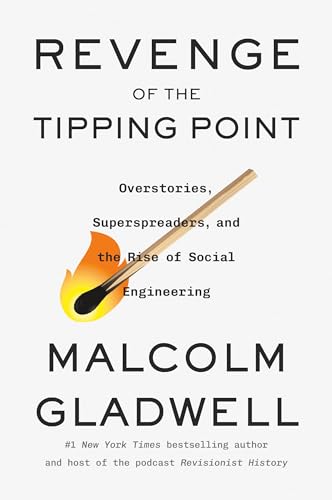 |
by: Malcolm Gladwell Find in Library Check on Amazon |
Through a series of stories, Gladwell explicates the causes of various kinds of epidemics. Read by the author. 8 hours, 25 minutes unabridged.
More books by Malcolm Gladwell
1. The Bomber Mafia
|
|
by: Malcolm Gladwell Release date: Apr 27, 2021 Number of Pages: 288 Find in Library Check on Amazon Google Preview |
A “truly compelling” (Good Morning America) New York Times bestseller that explores how technology and best intentions collide in the heat of war—from the creator and host of the podcast Revisionist History. In The Bomber Mafia, Malcolm Gladwell weaves together the stories of a Dutch genius and his homemade computer, a band of brothers in central Alabama, a British psychopath, and pyromaniacal chemists at Harvard to examine one of the greatest moral challenges in modern American history. Most military thinkers in the years leading up to World War II saw the airplane as an afterthought. But a small band of idealistic strategists, the “Bomber Mafia,” asked: What if precision bombing could cripple the enemy and make war far less lethal? In contrast, the bombing of Tokyo on the deadliest night of the war was the brainchild of General Curtis LeMay, whose brutal pragmatism and scorched-earth tactics in Japan cost thousands of civilian lives, but may have spared even more by averting a planned US invasion. In The Bomber Mafia, Gladwell asks, “Was it worth it?” Things might have gone differently had LeMay’s predecessor, General Haywood Hansell, remained in charge. Hansell believed in precision bombing, but when he and Curtis LeMay squared off for a leadership handover in the jungles of Guam, LeMay emerged victorious, leading to the darkest night of World War II. The Bomber Mafia is a riveting tale of persistence, innovation, and the incalculable wages of war.
2. Talking To Strangers
|
|
by: Malcolm Gladwell Release date: Sep 10, 2019 Number of Pages: 319 Find in Library Check on Amazon Google Preview |
Malcolm Gladwell, host of the podcast Revisionist History and author of the #1 New York Times bestseller Outliers, offers a powerful examination of our interactions with strangers and why they often go wrong—now with a new afterword by the author. A Best Book of the Year: The Financial Times, Bloomberg, Chicago Tribune, and Detroit Free Press How did Fidel Castro fool the CIA for a generation? Why did Neville Chamberlain think he could trust Adolf Hitler? Why are campus sexual assaults on the rise? Do television sitcoms teach us something about the way we relate to one another that isn’t true? Talking to Strangers is a classically Gladwellian intellectual adventure, a challenging and controversial excursion through history, psychology, and scandals taken straight from the news. He revisits the deceptions of Bernie Madoff, the trial of Amanda Knox, the suicide of Sylvia Plath, the Jerry Sandusky pedophilia scandal at Penn State University, and the death of Sandra Bland—throwing our understanding of these and other stories into doubt. Something is very wrong, Gladwell argues, with the tools and strategies we use to make sense of people we don’t know. And because we don’t know how to talk to strangers, we are inviting conflict and misunderstanding in ways that have a profound effect on our lives and our world. In his first book since his #1 bestseller David and Goliath, Malcolm Gladwell has written a gripping guidebook for troubled times.
3. Do Humankind’s Best Days Lie Ahead
|
|
by: Steven Pinker, Matt Ridley, Alain de Botton, Malcolm Gladwell Release date: Nov 03, 2016 Number of Pages: 128 Find in Library Check on Amazon Google Preview |
From the Enlightenment onwards, the West has had an enduring belief that through the evolution of institutions, innovations, and ideas, the human condition is improving. This process is supposedly accelerating as new technologies, individual freedoms, and the spread of global norms empower individuals and societies around the world. But is progress inevitable? Its critics argue that human civilization has become different, not better, over the last two and a half centuries. What is seen as a breakthrough or innovation in one period becomes a setback or limitation in another. In short, progress is an ideology not a fact; a way of thinking about the world as opposed to a description of reality. So is the cup half full or half empty? As part of the Munk Debates series, held in Toronto biannually, pioneering cognitive scientist Steven Pinker and bestselling author Matt Ridley squared off against noted philosopher Alain de Botton and bestselling author Malcolm Gladwell, giving us an entertaining and thought-provoking face-off between four of the world’s most renowned thinkers.
4. Do Humankind’s Best Days Lie Ahead?
|
|
by: Steven Pinker, Matt Ridley, Alain de Botton, Malcolm Gladwell Release date: Jun 07, 2016 Number of Pages: 88 Find in Library Check on Amazon Google Preview |
Progress. It is one of the animating concepts of the modern era. From the Enlightenment onwards, the West has had an enduring belief that through the evolution of institutions, innovations, and ideas, the human condition is improving. This process is supposedly accelerating as new technologies, individual freedoms, and the spread of global norms empower individuals and societies around the world. But is progress inevitable? Its critics argue that human civilization has become different, not better, over the last two and a half centuries. What is seen as a breakthrough or innovation in one period becomes a setback or limitation in another. In short, progress is an ideology not a fact; a way of thinking about the world as opposed to a description of reality. In the seventeenth semi-annual Munk Debates, which was held in Toronto on November 6, 2015, pioneering cognitive scientist Steven Pinker and bestselling author Matt Ridley squared off against noted philosopher Alain de Botton and bestselling author Malcolm Gladwell to debate whether humankind’s best days lie ahead.
5. David And Goliath
|
|
by: Malcolm Gladwell Release date: Oct 01, 2013 Number of Pages: 280 Find in Library Check on Amazon Google Preview |
Explore the power of the underdog in Malcolm Gladwell’s dazzling examination of success, motivation, and the role of adversity in shaping our lives, from the bestselling author of The Bomber Mafia. Three thousand years ago on a battlefield in ancient Palestine, a shepherd boy felled a mighty warrior with nothing more than a stone and a sling, and ever since then the names of David and Goliath have stood for battles between underdogs and giants. David’s victory was improbable and miraculous. He shouldn’t have won. Or should he have? In David and Goliath, Malcolm Gladwellchallenges how we think about obstacles and disadvantages, offering a new interpretation of what it means to be discriminated against, or cope with a disability, or lose a parent, or attend a mediocre school, or suffer from any number of other apparent setbacks. Gladwell begins with the real story of what happened between the giant and the shepherd boy those many years ago. From there, David and Goliath examines Northern Ireland’s Troubles, the minds of cancer researchers and civil rights leaders, murder and the high costs of revenge, and the dynamics of successful and unsuccessful classrooms—all to demonstrate how much of what is beautiful and important in the world arises from what looks like suffering and adversity. In the tradition of Gladwell’s previous bestsellers—The Tipping Point, Blink, Outliers and What the Dog Saw—David and Goliath draws upon history, psychology, and powerful storytelling to reshape the way we think of the world around us.
6. Malcolm Gladwell: Collected
|
|
by: Malcolm Gladwell Release date: Nov 01, 2011 Find in Library Check on Amazon Google Preview |
In the past decade, Malcolm Gladwell has written three books that have radically changed how we understand our world and ourselves: The Tipping Point, Blink, and Outliers. Regarded by many as the most gifted and influential author and journalist in America today, Gladwell’s rare ability to connect with audiences of such varied interests has ensured that each title become a phenomenal bestseller with more than ten million copies in print combined. Now, Gladwell’s landmark investigations into the world around us are collected together for the first time. Beautifully repackaged and redesigned, including for the first time illustrations throughout each book, MALCOLM GLADWELL: COLLECTED is a perfect treasury of prose and provocation for Gladwell fans old and new.
7. What The Dog Saw
|
|
by: Malcolm Gladwell Release date: Jan 01, 2010 Find in Library Check on Amazon Google Preview |
What is the difference between choking and panicking? Why are there dozens of varieties of mustard-but only one variety of ketchup? What do football players teach us about how to hire teachers? What does hair dye tell us about the history of the 20th century? In the past decade, Malcolm Gladwell has written three books that have radically changed how we understand our world and ourselves: ” The Tipping Point”; “Blink”; and “Outliers.” Now, in “What the Dog Saw,” he brings together, for the first time, the best of his writing from “The””New Yorker” over the same period. Here is the bittersweet tale of the inventor of the birth control pill, and the dazzling inventions of the pasta sauce pioneer Howard Moscowitz. Gladwell sits with Ron Popeil, the king of the American kitchen, as he sells rotisserie ovens, and divines the secrets of Cesar Millan, the “dog whisperer” who can calm savage animals with the touch of his hand. He explores intelligence tests and ethnic profiling and “hindsight bias” and why it was that everyone in Silicon Valley once tripped over themselves to hire the same college graduate. “Good writing,” Gladwell says in his preface, “does not succeed or fail on the strength of its ability to persuade. It succeeds or fails on the strength of its ability to engage you, to make you think, to give you a glimpse into someone else’s head.” “What the Dog Saw “is yet another example of the buoyant spirit and unflagging curiosity that have made Malcolm Gladwell our most brilliant investigator of the hidden extraordinary.
8. Personality, Character, and Intelligence
|
|
by: Malcolm Gladwell Release date: Oct 20, 2009 Number of Pages: 83 Find in Library Check on Amazon Google Preview |
!–StartFragment–What is the difference between choking and panicking? Why are there dozens of varieties of mustard-but only one variety of ketchup? What do football players teach us about how to hire teachers? What does hair dye tell us about the history of the 20th century? In the past decade, Malcolm Gladwell has written three books that have radically changed how we understand our world and ourselves: The Tipping Point; Blink; and Outliers. Now, in What the Dog Saw, he brings together, for the first time, the best of his writing from TheNew Yorker over the same period. Here is the bittersweet tale of the inventor of the birth control pill, and the dazzling inventions of the pasta sauce pioneer Howard Moscowitz. Gladwell sits with Ron Popeil, the king of the American kitchen, as he sells rotisserie ovens, and divines the secrets of Cesar Millan, the “dog whisperer” who can calm savage animals with the touch of his hand. He explores intelligence tests and ethnic profiling and “hindsight bias” and why it was that everyone in Silicon Valley once tripped over themselves to hire the same college graduate. “Good writing,” Gladwell says in his preface, “does not succeed or fail on the strength of its ability to persuade. It succeeds or fails on the strength of its ability to engage you, to make you think, to give you a glimpse into someone else’s head.” What the Dog Saw is yet another example of the buoyant spirit and unflagging curiosity that have made Malcolm Gladwell our most brilliant investigator of the hidden extraordinary. !–EndFragment–
9. Theories, Predictions, and Diagnoses
|
|
by: Malcolm Gladwell Release date: Oct 20, 2009 Number of Pages: 97 Find in Library Check on Amazon Google Preview |
!–StartFragment–What is the difference between choking and panicking? Why are there dozens of varieties of mustard-but only one variety of ketchup? What do football players teach us about how to hire teachers? What does hair dye tell us about the history of the 20th century? In the past decade, Malcolm Gladwell has written three books that have radically changed how we understand our world and ourselves: The Tipping Point; Blink; and Outliers. Now, in What the Dog Saw, he brings together, for the first time, the best of his writing from TheNew Yorker over the same period. Here is the bittersweet tale of the inventor of the birth control pill, and the dazzling inventions of the pasta sauce pioneer Howard Moscowitz. Gladwell sits with Ron Popeil, the king of the American kitchen, as he sells rotisserie ovens, and divines the secrets of Cesar Millan, the “dog whisperer” who can calm savage animals with the touch of his hand. He explores intelligence tests and ethnic profiling and “hindsight bias” and why it was that everyone in Silicon Valley once tripped over themselves to hire the same college graduate. “Good writing,” Gladwell says in his preface, “does not succeed or fail on the strength of its ability to persuade. It succeeds or fails on the strength of its ability to engage you, to make you think, to give you a glimpse into someone else’s head.” What the Dog Saw is yet another example of the buoyant spirit and unflagging curiosity that have made Malcolm Gladwell our most brilliant investigator of the hidden extraordinary. !–EndFragment–
10. Obsessives, Pioneers, and Other Varieties of Minor Genius
|
|
by: Malcolm Gladwell Release date: Oct 20, 2009 Number of Pages: 99 Find in Library Check on Amazon Google Preview |
!–StartFragment–What is the difference between choking and panicking? Why are there dozens of varieties of mustard-but only one variety of ketchup? What do football players teach us about how to hire teachers? What does hair dye tell us about the history of the 20th century? In the past decade, Malcolm Gladwell has written three books that have radically changed how we understand our world and ourselves: The Tipping Point; Blink; and Outliers. Now, in What the Dog Saw, he brings together, for the first time, the best of his writing from TheNew Yorker over the same period. Here is the bittersweet tale of the inventor of the birth control pill, and the dazzling inventions of the pasta sauce pioneer Howard Moscowitz. Gladwell sits with Ron Popeil, the king of the American kitchen, as he sells rotisserie ovens, and divines the secrets of Cesar Millan, the “dog whisperer” who can calm savage animals with the touch of his hand. He explores intelligence tests and ethnic profiling and “hindsight bias” and why it was that everyone in Silicon Valley once tripped over themselves to hire the same college graduate. “Good writing,” Gladwell says in his preface, “does not succeed or fail on the strength of its ability to persuade. It succeeds or fails on the strength of its ability to engage you, to make you think, to give you a glimpse into someone else’s head.” What the Dog Saw is yet another example of the buoyant spirit and unflagging curiosity that have made Malcolm Gladwell our most brilliant investigator of the hidden extraordinary. !–EndFragment–
11. Outliers
|
|
by: Malcolm Gladwell Release date: Nov 18, 2008 Number of Pages: 174 Find in Library Check on Amazon Google Preview |
From the bestselling author of Blink and The Tipping Point, Malcolm Gladwell’s Outliers: The Story of Success overturns conventional wisdom about genius to show us what makes an ordinary person an extreme overachiever. Why do some people achieve so much more than others? Can they lie so far out of the ordinary? In this provocative and inspiring book, Malcolm Gladwell looks at everyone from rock stars to professional athletes, software billionaires to scientific geniuses, to show that the story of success is far more surprising, and far more fascinating, than we could ever have imagined. He reveals that it’s as much about where we’re from and what we do, as who we are – and that no one, not even a genius, ever makes it alone. Outliers will change the way you think about your own life story, and about what makes us all unique. ‘Gladwell is not only a brilliant storyteller; he can see what those stories tell us, the lessons they contain’ Guardian ‘Malcolm Gladwell is a global phenomenon … he has a genius for making everything he writes seem like an impossible adventure’ Observer ‘He is the best kind of writer – the kind who makes you feel like you’re a genius, rather than he’s a genius’ The Times
12. Blink
|
|
by: Malcolm Gladwell Release date: Apr 03, 2007 Number of Pages: 291 Find in Library Check on Amazon Google Preview |
From the #1 bestselling author of The Bomber Mafia, the landmark book that has revolutionized the way we understand leadership and decision making. In his breakthrough bestseller The Tipping Point, Malcolm Gladwell redefined how we understand the world around us. Now, in Blink, he revolutionizes the way we understand the world within. Blink is a book about how we think without thinking, about choices that seem to be made in an instant–in the blink of an eye–that actually aren’t as simple as they seem. Why are some people brilliant decision makers, while others are consistently inept? Why do some people follow their instincts and win, while others end up stumbling into error? How do our brains really work–in the office, in the classroom, in the kitchen, and in the bedroom? And why are the best decisions often those that are impossible to explain to others? In Blink we meet the psychologist who has learned to predict whether a marriage will last, based on a few minutes of observing a couple; the tennis coach who knows when a player will double-fault before the racket even makes contact with the ball; the antiquities experts who recognize a fake at a glance. Here, too, are great failures of “blink”: the election of Warren Harding; “New Coke”; and the shooting of Amadou Diallo by police. Blink reveals that great decision makers aren’t those who process the most information or spend the most time deliberating, but those who have perfected the art of “thin-slicing”–filtering the very few factors that matter from an overwhelming number of variables.
13. Tipping Point
|
|
by: Malcolm Gladwell Release date: Nov 01, 2006 Number of Pages: 204 Find in Library Check on Amazon Google Preview |
From the bestselling author of The Bomber Mafia: discover Malcolm Gladwell’s breakthrough debut and explore the science behind viral trends in business, marketing, and human behavior. The tipping point is that magic moment when an idea, trend, or social behavior crosses a threshold, tips, and spreads like wildfire. Just as a single sick person can start an epidemic of the flu, so too can a small but precisely targeted push cause a fashion trend, the popularity of a new product, or a drop in the crime rate. This widely acclaimed bestseller, in which Malcolm Gladwell explores and brilliantly illuminates the tipping point phenomenon, is already changing the way people throughout the world think about selling products and disseminating ideas. “A wonderful page-turner about a fascinating idea that should affect the way every thinking person looks at the world.” —Michael Lewis
14. Unleashing the Ideavirus
|
|
by: Seth Godin, Malcolm Gladwell Release date: Nov 01, 2001 Number of Pages: 205 Find in Library Check on Amazon Google Preview |
The book that sparked a marketing revolution. “This is a subversive book. It says that the marketer is not–and ought not to be–at the center of successful marketing. The customer should be. Are you ready for that?” –From the Foreword by Malcolm Gladwell, author of The Tipping Point. Counter to traditional marketing wisdom, which tries to count, measure, and manipulate the spread of information, Seth Godin argues that the information can spread most effectively from customer to customer, rather than from business to customer. Godin calls this powerful customer-to-customer dialogue the ideavirus, and cheerfully eggs marketers on to create an environment where their ideas can replicate and spread. In lively detail, Godin looks at the ways companies such as PayPal, Hotmail, GeoCities, even Volkswagen have successfully launched ideaviruses. He offers a “recipe” for creating your own ideavirus, identifies the key factors in the successful spread of an ideavirus (powerful sneezers, hives, a clear vector, a smooth, friction-free transmission), and shows how any business, large or small, can use ideavirus marketing to succeed in a world that just doesn’t want to hear it anymore from the traditional marketers.
Last updated on Sunday, December 22, 2024
 Books and Movies from Local Library